

NBO Montreal Tale of the Tape: Shelton vs. Nakashima
ATP
Tournament News
August 13, 2026




Tennis Canada continues to leave no stone unturned when it comes to reaching their goal of becoming a sustainability leader in Canada and throughout the world by 2030.
Mindful of the social, economic, and environmental impacts associated with hosting major events, Tennis Canada has implemented a sustainability strategy to reduce its environmental footprint and guide its actions. The Montreal and Toronto editions of the National Bank Open presented by Rogers are fully committed to their environmental responsibilities and are implementing concrete initiatives to reduce their impact and contribute to a sustainable legacy.
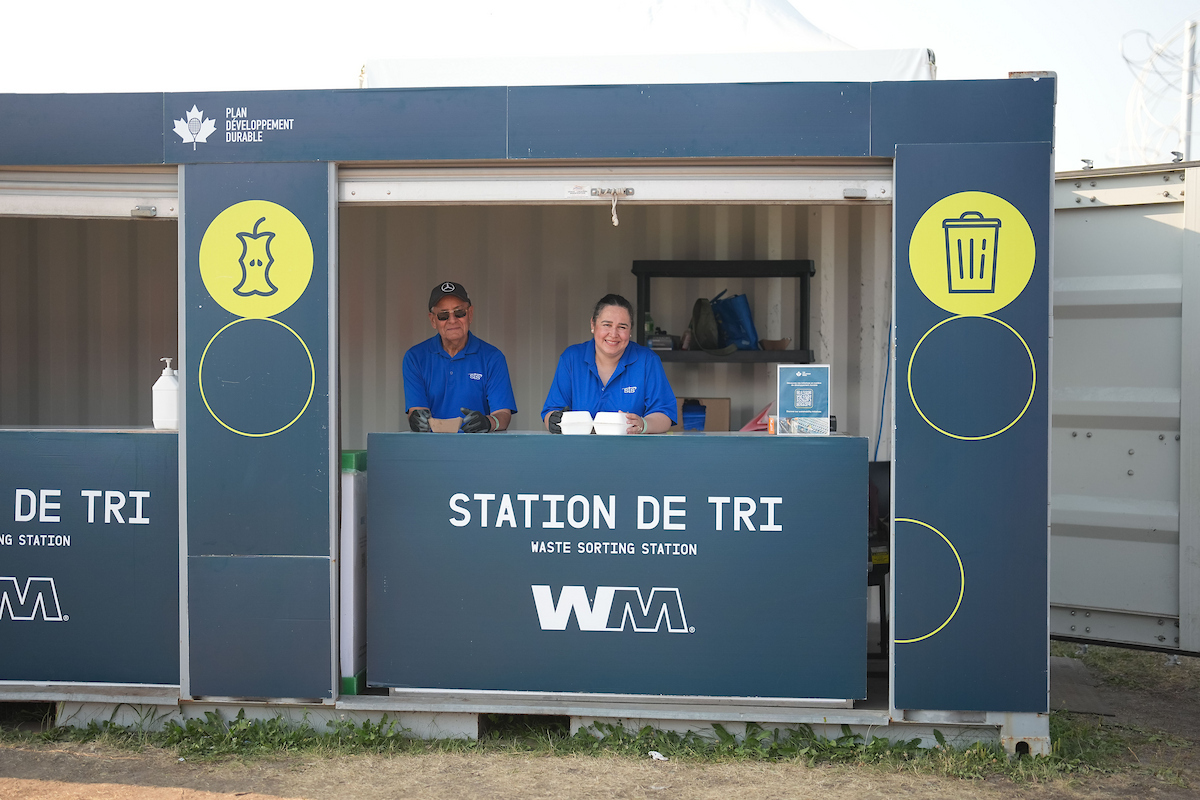
One of the highlights of the sustainability initiatives implemented in both cities is an On-Site Sorting Station powered by WM, located near dining and resting areas where many fans enjoy some downtime between matches with food and a beverage in hand on both sites, it allows for a large volume of residual materials to be properly sorted.
Centralizing the operation, which is possible because of WM’s expertise, ensures that recyclable and compostable materials are separated at the source. This reduces the risk of contamination and increases the accuracy of sorting, leading to higher diversion rates from landfills.
“What appealed to WM Canada most about Tennis Canada's sustainability strategy for the National Bank Open is its comprehensive and forward-thinking approach,” said Tracy Black, President of WM Canada. “The progress made to date on Tennis Canada’s four specific targets including: zero waste by 2030, carbon neutral by 2030, environmentally and socially sustainable by 2030, promoters and inspirers of community action by 2030, demonstrates the organization’s commitment and effectiveness in driving meaningful change as we work to create a more sustainable tomorrow.”
In addition to allowing for the separation of materials at the source, a sorting station provides a controlled environment where trained staff can manage the sorting process efficiently. This control ensures that materials are handled correctly and sorted into the appropriate streams, maximizing the effectiveness of recycling and composting efforts. Its presence can also serve as an educational tool for participants and spectators as it raises awareness about the importance of proper material segregation and encourages environmentally responsible behaviour, both during the tournament and beyond.
The sorting process is as easy as 1, 2, 3. Step 1: Fans bring their waste to the WM sorting station, Step 2: the waste is sorted, Step 3: the waste is collected daily for processing.
All food containers (plates, boxes, etc.) and utensils distributed on-site at IGA Stadium are compostable or recyclable. Plus, all glasses are reusable.
Once guests have finished eating, they can make their way to the sorting station where they will be greeted by a team that is responsible for putting everything in the right bins.
Shelves are installed in the containers so that employees can accumulate surplus during the big rushes and concentrate on sorting during the quieter moments.
People can also bring their reusable glasses and cups to the sorting station. They will be washed and put back into circulation.
Since 2025, thanks to the updated provincial consignment policy for Quebec, the On-Site Sorting Station powered by WM plays a key role in separating both cans and refundable plastic bottles from other waste. Returning cans and bottles instead of sending them to a general recycling facility ensures better recyclability rates.
In 2025, 219,251 attendees came to the National Bank Open. We collected 66.63 tons of material waste, that’s 0.30kg of waste per attendee. We diverted almost 60% of that waste from landfill.
All containers needed for drinking or eating on-site are reusable, compostable or recyclable.
Through our partnership with WM, Toronto now has a compost hauler to capture all compost materials from the public areas.
Toronto achieved a 58.92% diversion rate in 2024 which was 16% YOY increase from 2023.
Toronto's sorting station features a gamification spin-wheel component that attracts fans and offers sustainable sourced prizes to those who bring their waste to the sorting station. This year, Toronto has shifted to utilizing kickback coupons from all our great partners on-site to limit the production of physical items.
Weighing of the waste for each sorting stream is conducted within the sorting station and a unique 'waste diversion report' will be produced for the space in addition to the overall tournament diversion report that will help us better analyze and make future improvements.
Toronto prioritizes utilizing recycled & recyclable materials when creating signage for the National Bank Open, opting for using eco-friendly UV vegetable inks, biodegradable specialty board substrates, and other materials which are all able to be recycled. In 2025, we recycled 1664kg of signage.
Using industry- leading thermomechanical treatment technology, our signage partner transforms unsalvageable, post-recycled materials into renewable steam and electricity through waste-to-energy processes.
Learn more about Tennis Canada’s sustainability efforts at the National Bank Open and its ongoing commitment to the planet.